

Mini Fiction Character Workshop: Virgo Season

Virgo characters notice the loose thread. The typo everyone else missed. The strange pause before someone says I'm fine. The coffee cup that was left untouched even though you always finish it.
They notice because they are paying attention, and paying attention is one of the most intimate things a person can do.
This workshop is designed to help you write a Virgo character in real time. Not as the cliché perfectionist with an immaculate planner, but as a layered, observant presence shaped by discernment, usefulness, devotion, self-criticism, and the complicated desire to make things better.
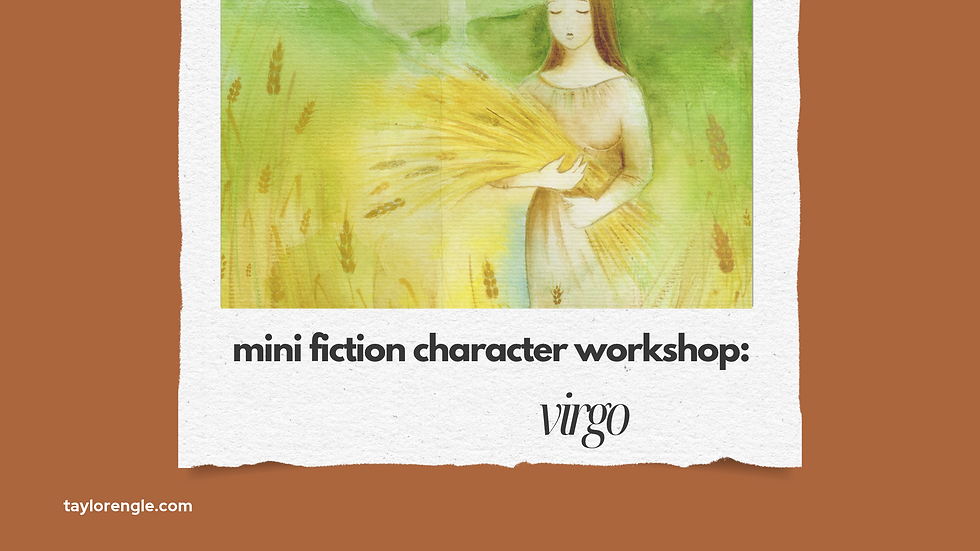
What is a Virgo?
Virgo is a mutable earth sign ruled by Mercury: the planet of communication, thought, information, and interpretation, but this isn't Mercury operating like Gemini.
Gemini collects information because it wants to know. Virgo collects information because it wants to do something with it.
These characters sort, edit, refine, and repair. They look at what exists and instinctively imagine what it could become. This is why Virgo characters can make incredible problem-solvers. It's also why they can drive themselves insane.
The highest expression
At their best, Virgo characters are thoughtful, capable, and devoted.
Their love hides inside practical things. They brought an extra charger because they knew you'd forget yours. They researched the restaurant beforehand because you have an allergy. They edited your résumé at midnight and didn't mention they were exhausted.
Virgo shows love by saying, “I already took care of it.” They make people feel cared for because they notice what other people miss.
The shadow expression
In shadow, this discernment becomes criticism.
Virgo can become so focused on improvement that nothing ever feels finished, including themselves. There is always another adjustment, another mistake to correct. Another version of themselves they believe might finally be good enough.
Control can sneak in here, too. If they can anticipate every problem, organize every detail, and make themselves indispensable, maybe nothing will fall apart. The shadow Virgo isn't necessarily afraid of imperfection. They're afraid that imperfection will cost them something.
Writing the Virgo body and presence
Virgo characters most often reveal themselves through tiny actions. Straightening something while they're talking. Reading the instructions first. Noticing a stain on someone's sleeve and quietly handing them a napkin.
Their physicality doesn't have to be rigid or polished. Your Virgo can have a disastrous bedroom and 47 unanswered emails. What matters is where their attention goes. Give them one thing they cannot help noticing, then make everyone else overlook it.
On the page
Here's a fun rule for writing Virgo: Don't tell us they're observant. Let them observe.
Instead of saying, “She could tell something was wrong,” try letting her notice that her brother has been stirring the same cup of coffee for four minutes. Instead of telling us your Virgo cares about someone, show us what they quietly do for them.
Virgo lives beautifully in the details. Use them.
The Virgo interior world
Beneath all that competence is a surprisingly tender question: Am I valuable when I'm not useful?
That's where Virgo gets really interesting.
A character who is always fixing things may not know what to do when someone simply wants them there. A character who gives excellent advice may be terrible at asking for help. A character who extends patience to everyone else may offer themselves none at all.
Their arc doesn't have to be about becoming less discerning. It might be about realizing they don't have to earn their place by constantly improving everything around them.
Core Virgo drives
A need to understand how things work.
A need to contribute.
A need to improve what matters to them.
Common inner conflicts
Service versus self-sacrifice.
Discernment versus criticism.
Improvement versus acceptance.
Mini Workshop: Build Your Virgo Character
Exercise One: Give Them Something They Can't Fix
Choose one problem in your character's life that cannot be solved through research, effort, planning, or sheer competence.
Now ask: What do they do when doing more won't help? Do they obsess? Withdraw? Try anyway? Finally ask someone else for help?
Exercise Two: The Virgo Love Language
Your character loves someone but cannot say it directly. Give them three tiny actions that say it instead. Maybe they sharpen their pencils before an exam. Replace the dead bulb on their porch. Keep their favorite cereal stocked even after an argument.
Don't explain the actions. Let the reader understand.
Short story prompts
The Mistake: Your character makes one tiny error. No one else cares. They cannot stop thinking about it.
The Day Off: Someone forces your character to spend an entire day doing absolutely nothing useful. They hate it. Until they don't.
The Unfixable Person: They love someone they cannot rescue, improve, organize, or protect from their own choices.
Setting as Virgo symbolism
Virgo thrives in places where details matter.
A kitchen during dinner rush. A cluttered desk at 2 a.m. A garden that needs tending. A hospital waiting room. A workshop halfway through a repair.
Give your Virgo something imperfect to look at, then watch what they do with their hands.
Remember: Virgo characters are not perfectionists. They are editors of their worlds.
They notice what could be better because they care enough to imagine it differently. Their stories become interesting when improvement is no longer the answer. When the person who always knows what to do finally encounters something that cannot be optimized.
When writing Virgo, ask: Who are they when there is nothing left to fix?
That's where your story begins.


Comments